Introduction — February 1, 2026
This comprehensive buyer's guide presents the top portable power stations, generators, and batteries for RVs, campers, and travel as of February 1, 2026. It targets readers who require reliable off-grid power for recreational vehicles and travel situations. The guide combines practical sizing methods, model recommendations, comparisons, and real-world applications to support informed purchasing decisions.
Why Portable Power Matters for RVs and Travel
Reliable portable power enables extended dry camping, supports medical devices such as CPAP machines, and powers essential appliances while on the road. One must consider power capacity, output types, charging speed, and portability to match the specific travel style and vehicle layout. This section clarifies core concepts and frames the selection process for RV owners and campers alike.
How to Choose: Key Criteria
Power Capacity and Watt-hours
Watt-hours (Wh) express energy storage and define how long devices can run without recharge. One calculates required Wh by summing device wattage multiplied by hours of use per day and adding a 20 percent buffer for safety. For example, a small refrigerator at 100 watts running 12 hours consumes 1200 Wh daily, which informs battery sizing and charge strategy.
Continuous and Peak Inverter Ratings
Inverter ratings indicate the continuous AC output and short-term surge capacity to start motors and compressors. One should select an inverter with a continuous rating above the expected combined load and a surge rating sufficient for appliance start-up currents. This ensures refrigerators, microwaves, and air conditioners operate reliably without overloading the system.
Battery Chemistry: LiFePO4 vs. NMC vs. Lead-Acid
LiFePO4 batteries provide superior cycle life, thermal stability, and depth-of-discharge compared with lead-acid and many NMC cells. They are heavier and costlier per unit than lead-acid but provide better long-term value for frequent travelers. One should balance upfront cost, weight, and lifecycle when choosing chemistry for an RV battery bank.
Charging Options and Solar Compatibility
Most modern power solutions provide multi-mode charging: AC, solar, and vehicle alternator charging. For extended off-grid travel, prioritize systems with MPPT solar controllers and higher solar input limits. Efficient solar charging reduces generator runtime and provides quieter, cleaner energy during remote stays.
Ports, Outlets, and Expandability
Look for a variety of outputs: AC outlets, 12V DC ports, USB-A, USB-C PD, and Anderson connectors for battery expansion. Expandable systems allow users to add additional battery modules or external generators for longer trips. Expandability increases flexibility and protects the investment as travel needs evolve.
Weight, Footprint, and Mounting Considerations
Portable power stations are designed for transport while larger battery banks require secure mounting within an RV or trailer. One should verify weight limits on compartments and consider vibration isolation and ventilation for permanent installations. Proper mounting and cable routing improve safety and longevity of installed batteries and inverters.
Safety Features and Management
Battery Management Systems (BMS), overcurrent protection, thermal cutoffs, and surge protection are critical safety features. These systems prevent overcharging, short circuits, and thermal runaway. One must confirm that selected products include certified safety features and follow recommended installation practices.
Top Picks for 2026: Portable Power Stations
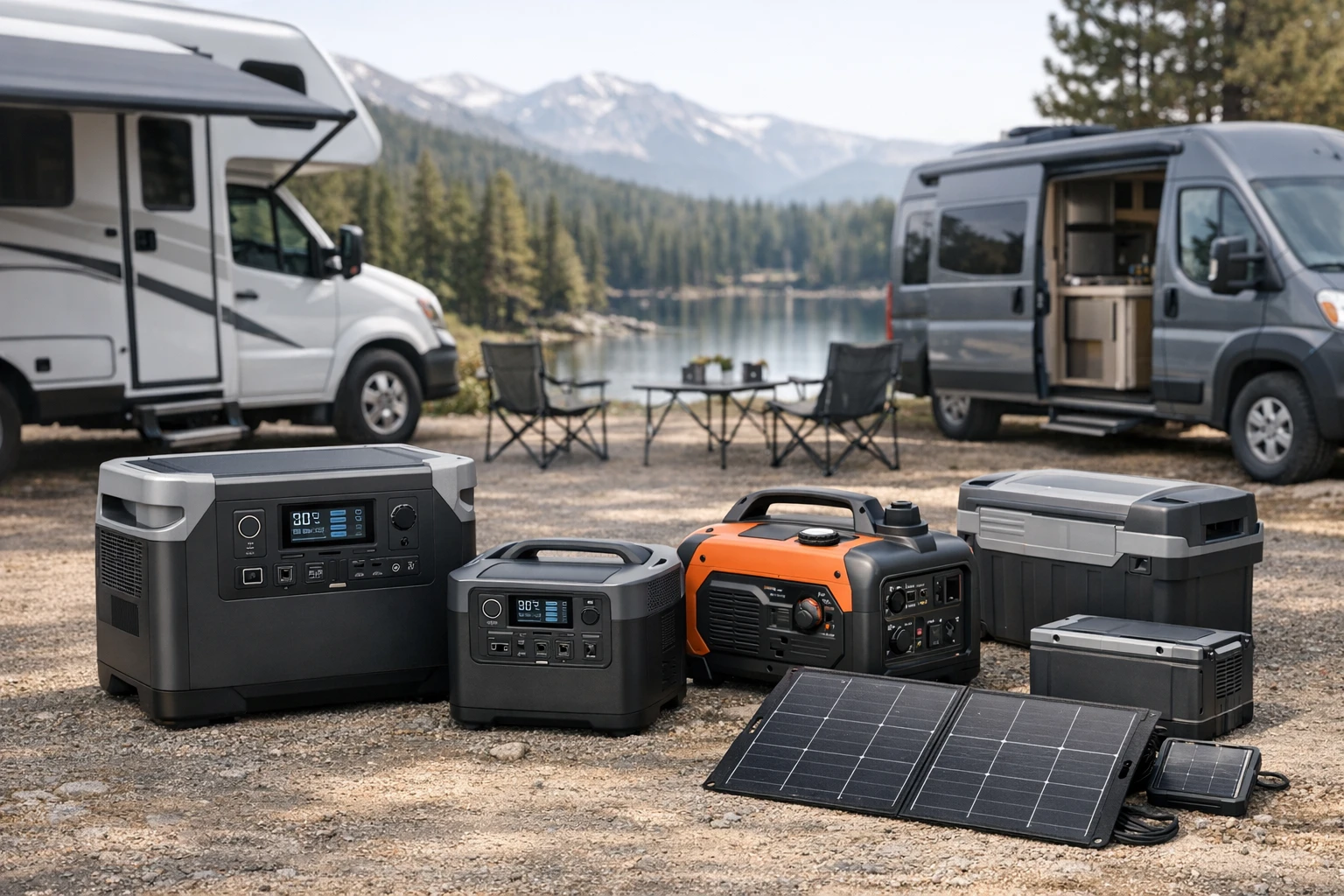
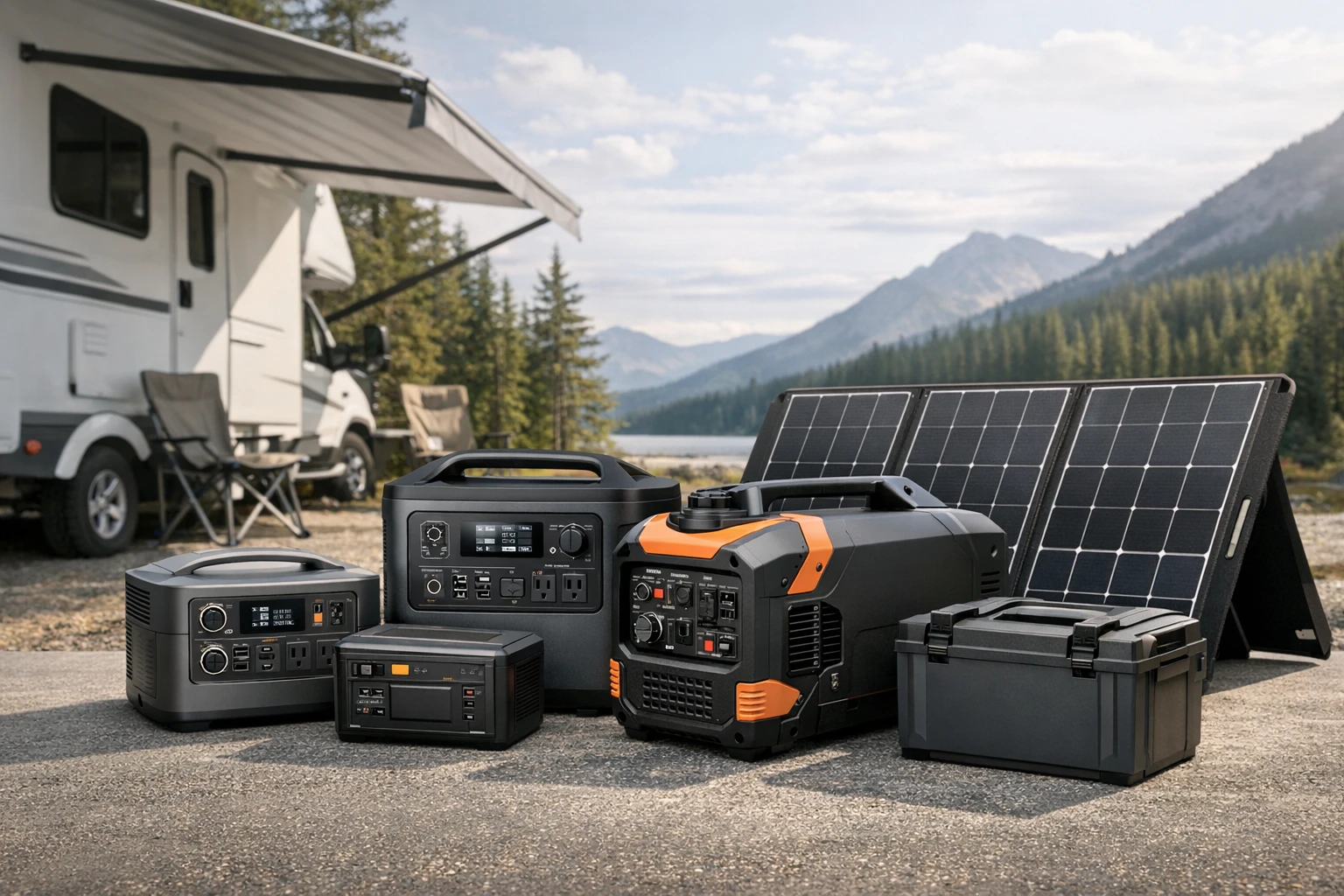
Below are recommended portable power stations that suit a range of RV and travel needs, from weekend campers to full-time travelers. Each pick includes a brief description, pros and cons, and a suggested user case to assist selection.
EcoFlow Delta 2 / Delta Pro
EcoFlow Delta Pro offers high-capacity storage and fast charging combined with modular expandability and robust inverter performance. The system supports home backup, solar input, and generator passthrough, making it suitable for larger RVs. Pros include fast recharge times and modular battery expansion; cons include higher upfront cost and substantial weight for the base unit.
Goal Zero Yeti 6000X
The Goal Zero Yeti 6000X provides very large capacity with a mature ecosystem of accessories and established reliability for RV installations. It integrates with solar and supports whole-vehicle backup scenarios. Pros include proven track record and high capacity; cons include cost and the physical footprint that demands planned installation space.
Jackery Explorer 2000 Pro
Jackery Explorer 2000 Pro balances portability and capacity with a focus on road users who prefer lighter solutions. It suits couples or small families using a refrigerator, lights, and small appliances. Pros include portability and reliable brand support; cons include limited expandability and lower cycle life compared with LiFePO4-based systems.
Anker 767 (PowerHouse 1229)
Anker 767 features robust USB-C PD outputs and a competitive balance between inverter capacity and battery storage for modern devices. It works well for overlanders and tech-heavy campers who require fast charging for laptops and devices. Pros include excellent fast-charging ports; cons include moderate capacity for longer stays without recharging.
Top Picks for 2026: Generators
Fuel-based generators remain essential for extended trips or high-draw appliances such as rooftop air conditioners. The following models represent the diversity of options suitable for RVs and travel.
Honda EU2200i / EU3200i
Honda inverter generators are durable, fuel-efficient, and quiet, making them ideal for RVers who require dependable backup power. These units excel at powering air conditioners and high-start-up loads with low noise. Pros include reliability and fuel efficiency; cons include higher purchase price and routine maintenance needs.
Westinghouse iGen4500
The Westinghouse iGen4500 offers a competitive combination of wattage, features, and price for RV users who need reliable AC output. It balances cost and capability for those running medium loads and occasional heavy appliances. Pros include value and wattage; cons include heavier weight than ultra-light inverter models.
Champion Dual-Fuel Portable Generators
Dual-fuel generators allow operation on gasoline or liquid propane, increasing fuel flexibility during travel. They perform well for extended trips where gasoline supply may vary and provide more options for fueling. Pros include fuel flexibility; cons include added complexity and slightly higher weight.
Top Picks for 2026: Batteries & 12V Battery Banks
Battery banks are the core of any RV power system, and LiFePO4 batteries dominate recommendations due to reliability and life-cycle benefits. Below are leading battery options for permanent installation.
Battle Born 100Ah LiFePO4
Battle Born 100Ah LiFePO4 batteries are widely used by RV owners for their proven performance, integrated BMS, and customer support. They are modular, can be configured in series or parallel, and reduce weight compared with lead-acid alternatives. Pros include long cycle life and compact size; cons include a higher initial price point.
RELiON RB100-LT
RELiON offers robust LiFePO4 options with strong warranty terms and scalable configurations for larger battery banks. These units suit users who plan to expand capacity over time and prefer professional installation. Pros include scalable architecture and warranty; cons include cost and required space for multiple modules.
Renogy & Victron Systems
Renogy and Victron provide flexible system components including battery packs, MPPT charge controllers, and monitoring hardware for custom installations. They support integrators and DIYers building a tailored RV power system. Pros include component compatibility and advanced monitoring; cons include steeper learning curve for configuration.
Step-by-Step: Sizing a System for a 3-Day Dry Camp
- List essential loads: refrigerator (100 W), lights (30 W), CPAP (40 W), phone charging (20 W), water pump (50 W). Sum continuous wattage and estimate hours of operation per day.
- Calculate daily Wh: multiply each device wattage by hours of use. For a couple: fridge 100 W x 12 h = 1200 Wh; lights 30 W x 4 h = 120 Wh; CPAP 40 W x 8 h = 320 Wh; phone charging 20 W x 2 h = 40 Wh; pump 50 W x 0.5 h = 25 Wh. Total = 1705 Wh.
- Add a 20 percent safety margin and account for inverter loss (approximately 10 percent). 1705 Wh x 1.3 = 2216.5 Wh. Round up to 2300 Wh usable capacity.
- Select storage with usable Wh above 2300 Wh. For a LiFePO4 100Ah 12V battery, usable Wh = 100 Ah x 12.8 V x 0.9 DoD = 1152 Wh. Two such batteries in parallel provide approximately 2304 Wh usable and meet the target.
- Choose charging: pair with a 600 W solar array and MPPT controller for daytime replenishment, and a portable generator as backup for cloudy conditions.
Installation and Safety: Best Practices
Install batteries in a ventilated, secure compartment with proper fusing and short-run positive cable routing to reduce voltage drop. Use appropriately sized cables, a fuse at the battery positive termination, and a BMS that supports cell balancing and overcurrent protection. One should also install a transfer switch if integrating an inverter-generator combination to prevent backfeed into utility or generator circuits.
Real-World Case Study: Full-Time RV Couple
A full-time RV couple with a mid-size refrigerator, rooftop air conditioning occasional use, and electronics chose a 6 kWh LiFePO4 bank paired with a 3 kW inverter and 1200 W solar array. This configuration allowed 2-4 days of continuous operation without generator use in summer conditions. The system reduced generator runtime by 80 percent compared with the prior lead-acid setup and improved reliability during remote stays.
Comparisons: Portable Station vs. Generator vs. Fixed Battery Bank
- Portable power stations: Best for light to medium loads, easy transport, and minimal installation. They are ideal for weekend campers and tech-centric travelers.
- Generators: Best for high continuous loads or rapid recharge; they provide extended runtime but require fuel and maintenance. They suit heavy-load scenarios and multi-day off-grid requirements.
- Fixed battery banks (LiFePO4): Best for frequent travelers seeking long-term reliability and deep cycle performance. They require professional installation but deliver superior lifecycle costs.
Pros and Cons Summary
Portable stations excel in convenience and portability but may lack the sustained power for full-size air conditioners. Generators provide indefinite runtime with fuel but introduce noise and maintenance concerns. Fixed LiFePO4 banks are the most durable solution but need planning for weight, space, and installation complexity.
Final Recommendations and Buying Strategy
One should start by calculating daily energy needs and match that to usable battery Wh, inverter rating, and charging options. For light to moderate travel, a portable power station between 2000 and 4000 Wh and 2000 to 3000 W inverter capacity will suffice. For full-time living or heavy loads, a modular LiFePO4 bank with a 3000 W plus inverter and a hybrid strategy combining solar and generator backup is recommended.
Conclusion
This Ultimate 2026 guide provides a practical roadmap to selecting the top portable power stations, generators, and batteries for RVs, campers, and travel. By following the sizing steps, evaluating key specifications, and considering real-world examples, one will make a purchase that aligns with travel style, reliability expectations, and budget. The right combination of battery chemistry, inverter capacity, and charging strategy transforms the RV experience with dependable off-grid power.